 Sign In
 Register
 Help
Help
Page 1 of 1
- You cannot start a new topic
-
 This topic is locked
How Halloween Was Created Theories I found in Internet
#1
 Spikeout

- Tired
-

- Group: Member
- Posts: 9,068
- Joined: 02-April 03
Posted 10 October 2003 - 05:02 PM
| QUOTE |
| History of Halloween! by Kelly Eigenman Everyone knows Halloween happens on the night of October 31. In modern times it’s full of creepy stories of witches, ghouls, and monsters. You can hear laughter of children going door to door shouting - Trick or treat! - and receiving candy. What brilliant genius invented Halloween? I’m really not sure. However, Halloween wasn’t started when the world knew you were born. It’s a lot older than that. There are probably hundreds of stories on how Halloween came about. Most people like to believe the ones that seem most impossible and most frightening. Well, here’s a summary of all the research I’ve done on Halloween: The custom connected with Halloween are thought to have started among the ancient Druids, who believed that on that evening Saman, the lord of the dead, called to him hosts of evil spirits. The Druids customarily lit huge fires on Halloween, apparently for the purpose of warding off all these spirits. Among the ancient Celts, Halloween was the last night of the year and was thought of as a lucky time for looking at the warnings of the future. The Celts also believed that the spirits of the dead came back to their earthly homes on that evening. After the Romans conquered Britain, they added to Halloween features of the Roman harvest festival held on November 1 in honor of Pomona, goddess of the fruits of trees. The Celtic tradition of lighting fires on Halloween survived until modern times in Scotland and Wales, and the concept of ghosts and witches is still common to all Halloween ceremonies. Traces of the Roman harvest festival survive in the custom, common in both the United States and Great Britain, of playing games involving fruit, such as ducking for apples in a tub of water. Of similar origin is the use of hollowed-out pumpkins carved to resemble scary faces and lit by candles placed inside. HAPPY HALLOWEEN!!!! |
| QUOTE |
| The Celtic peoples called the time between Samhain (pronounced "SOW-in" in Ireland, SOW-een in Wales, "SAV-en" in Scotland or even "SAM-haine" in non Gaelic speaking countries) and Brigid's Day "the period of little sun." Thus, Samhain is often named the "Last Harvest" or "Summer's End". While almost all Celtic based traditions recognize this Holiday as the end of the "old" year, some groups do not celebrate the coming of the "new year" until Yule. Some consider the time between Samhain and Yule as a time which does not even exist on the Earthly plane. The "time which is no time" was considered in the "old days" to be both very magickal and very dangerous. So even today, we celebrate this Holiday with a mixture of joyous celebration and 'spine tingling" reverence. The Samhain Holiday begins at sundown on October 31st. The nightide was always a time to be wary of walking alone in the countryside. So much more on this Night when the veils between the worlds of humans and spirits was at its thinnest. Traditional lore speaks of the dead returning to visit their kin and the doors to the Lands of the Sidhe (pronounced "shee") or Faery Realm being opened. "The Feast of the Dead" ("Fleadh nan Mairbh") is laid out by many to welcome these otherworldly visitors and gain their favor for the coming year. Many folks leave milk and cakes ("Bannock Samhain" ) outside their door on Samhain Eve or set a place at their table for their ancestors who may want to join in the celebrations with their kin and family. Some Witches use a chant at the beginning of the Feast to welcome their ancestors. One of these, for example goes like this: And so it is, we gather again, The feast of our dead to begin. Our Ancients, our Ancestors we invite, Come! And follow the setting of the sun. Whom do we call? We call them by name (Name your ancestor that you wish want to welcome.) The Ancients have come! Here with us stand Where ever the country, where ever the land They leave us not, to travel alone; Flesh of our flesh, bone of our bone! Grandmothers, Grandfathers, Great be their Power! Past ones and present-at this very hour! Welcome within are the dead who are kin, Feast here with us and rest here within Our hearth is your hearth and welcome to thee; Old tales to tell and new visions to see! It is also customary to light a new candle for the "new year". This ritual harkens back to the days when Samhain was one of only two days- the other being Beltaine-when it was considered correct to extinguish the "hearth fire" and then to re-light it. If your fire failed at any other time of the year, it was thought to be very bad luck indeed. Upon the rekindling of the fire in the morning, this blessing was often said: We Call Upon The Sacred Three: To Save... To Shield... To Surround The Hearth... The House... The Household This Night, Each Night, Every Night.! Many Witches of the Old Ways, actually celebrate "two" Samhains or Halloweens (Yes, some older traditions DO use the term "halloween"!). The "Old" date for Samhain occurs when the sun has reached 15 degrees Scorpio. (As a side note, the Catholic Church has "borrowed" this same day to celebrate the holiday of "Martinmas".) So if you follow this Way, you can always celebrate the "party aspect" with your friends on one date and the "worship" part with your kin on the other. |
| QUOTE |
| The Origin of Halloween Comes Out of the Sky + Von Del Chamberlain + Ghosts! Goblins! Harmless pranks. Trick or Treat. Halloween is here again! What a strange day this is. It might surprise you to learn that Halloween actually has an astronomical origin. How many parts can we divide the year into? I suppose the answer is, as many as we wish: we have months, weeks and days, hours and minutes. Some cultures have divided the year into only two seasons, one warm and the other cold, summer and winter. Currently most people think in terms of four seasons, and the official beginnings of these comes with the solstices and equinoxes. Thus, we started autumn this year in late September when Earth reached the place in its orbit so that the Sun crossed the point in space that is defined as the autumnal equinox. Although that was the official beginning, many people think about it differently. In practice, summer ends for most Americans with the Labor-Day weekend, the last holiday opportunity for getting away to some favorite campground when the weather is still apt to be conducive to such activity. After that, children are in school and stores advertise things that go with changes in the landscape accompanying changes in the weather, signaling the fall season. The same thing happens with winter. Even though it officially begins in late December, our lives sense the onslaught of winter earlier. In some sense, this is a reflection of the way things were in the times of our ancestors, at least for those of us who can trace our lineage back to Europe. So that you can see what I mean by this, let me introduce you to the concept of cross-quarter dates, the times between the equinoxes and solstices. In old Germanic and Celtic societies, what we call equinoxes and solstices marked the middles of the seasons, not the beginnings. Thus, the autumnal equinox, in late September, was the middle of autumn, and the beginning of winter was mid-way between the autumnal equinox and the winter solstice, one of four cross-quarter dates. Using this system, there are eight dates that divide the year: the four cross-quarter dates that, for those European people marked the beginnings of seasons; the two equinoxes and two solstices, marking the mid- points of the seasons in European tradition. So, let's focus on the cross-quarter date that we are approaching right now, the one between autumnal equinox and winter solstice. The Celts called it Samhain (pronounced sah-win), "summer's end." As the beginning of the cold part of the year, they thought of this as a dangerous time, a seam in the annual cycle when stitches might snap, ripping the fabric of reality to let in elements of chaos. This was the Celtic new-years eve, celebrated on the last day of October. They brought their cattle out of pastures into shelter, then celebrated with a great fire festival to encourage the dimming Sun not to vanish. People danced round bonfires to keep evil spirits away, but left their doors open in hopes that the kind spirits of loved ones might join them around their hearths. On this frightful evening divination was thought to be more effective than any other time, so methods were derived to ascertain who might marry, what great person might be born, who might rise to prominence, or who might die. In 835 AD, the Catholic Church named November 1 as All Saints' Day, a time to remember the holy people who had lived and died, but the traditions of the past persisted in new forms. Now bonfires blazed to light the paths of souls to heaven, church bells tolled to guard against evil, and people scattered graves with offerings of flowers and foods that had been favored by the deceased. The previous day, October 31, became known as All Hallows' Eve, or Halloween. Joined together, these two traditions, one pagan and the other Christian, continued to flourish in Scotland, Ireland and Wales. People went out guising, dressed in masks and robes to frighten away evil. Some went from farm to farm demanding food tributes to an old god, Muck Olla, carrying "jack-o'-lanterns;" hollow turnips with candles burning inside. An Irish tradition spoke of a man named Jack who wandered between heaven and **** with such a turnip set aglow by an ember thrown to him by the devil. Methods of divination included the gathering of Families around fires to throw in marked stones: any stones not later found among the ashes threatened the death of the throwers during the coming year. Young girls bobbed for apples, and those successful kept the fruit under their pillows hoping to dream of the ones they would marry. Bits and pieces of such traditions came to America with pilgrims fleeing some things of the past, but retaining others, often in revised form: pumpkins replaced Irish turnips; guising became trick-or-treating as children begged for food offerings that in olden times had been prepared for the dead. At the root of all of this is the fact that Earth, gliding in its orbit, had reached the place where we notice the diminishing energy from the Sun onto our part of the world. Thus, the origin of this cross-quarter celebration comes down from the sky. Think of it which ever way you wish: with the old Celts, the dangerous time of transition when one might encounter malicious spirits of the dead, monsters, and nowadays even aliens from other worlds; the middle of autumn; the beginning of winter; or just plain old Halloween. This article was modified from the original to serve as an information source for all Halloween cross-quarter events. |
| QUOTE | ||
| "The profoundest act of worship is to try to understand." --Cat Faber, The Word of God -------------------------------------------------------------------------------- very year, right around Halloween, we are treated to an outpouring of what can only be described as "scare" literature telling us all about how the holiday is 'satanic' and evil, and should not be celebrated by Christians. These opinions are backed up with some rather unusual and very frightening fantasies masquerading as historical facts. This article is -not- intended to address whether or not Satan exists, nor to show that 'witches' are all nice, grainola-eating vegetarians and tree-huggers who wouldn't harm a fly, nor is it an attack on Fundamentalist Christianity, but rather a discussion concerning some of the so-called 'facts' offered in some of the anti-Halloween publications. Let's look at four typical tracts circulating around the computer nets: "Halloween Oct. 31: What's It All About?" by someone named Sylvan Margadonna "Halloween: What It Is From A Christian Perspective" by a Mrs. Gloria Phillips (Bay View Church, P.O. Box 9277, Mobile, AL 36691) and two anonymous tracts, identified as "Tract 1" and "Tract 2." I have not corrected transcription errors in either of these tracts; They are exactly as received. Margadonna: Halloween (the name) means the evening before All Hallows or All Saints' Day, which is Nov. 1. All Saints' Day is observed by Roman Catholics, Episcopalians and Lutherans, to honor all the saints in Heaven, whether known or unknown. The day also used to be called Hallowmass from Old English word hallow, meaning sanctify. In the Roman Catholic Church, it is, with all solemnity, considered one of the most important observances of the church year. It is a day on which all Catholics are obliged to attend Mass. It is preceded by a vigil of preparation on the evening of Oct.31. And it is this vigil, All Hallows' Eve or Halloween, that is the most widely known feature of the observance. This is true, though Margadonna's linking the Church vigil to the current American celebration (in the light of what is said later) seems to me to show a possible agenda of anti-Catholicism, (and a mild quibble over the use of the word "Old English," as OE was more the language of "Beowulf" than Chaucer (Middle English) or Shakespeare. Even so, the tracts tend to very quickly degenerate into myth and pseudo-factual statements that cannot be backed up by hard data. Margadonna: However, Halloween is really of DRUIDIC origin. Most of the customs connected with the day are remnants of ancient "religious" beliefs and celebrations of the New Year, first of the Druids and then of the Romans who conquered them. Margadonna: For the Celtic tribes who followed the religion of the Druids and lived in Wales, Ireland, Scotland, and Britan, Nov. 1 was New Years Day. It was also a joint festival honoring their Sun "god" and "Samhain", the lord of the dead. Phillips: In 834 A.D. Gregory IV extended the feast for all the church and it became known as All Saint's Day, still remembering the dead. Samhain, a Druid god of the dead was honored at Halloween in Britain, France, Germany and the Celtic countries. Samhain called together all wicked souls who died within the past year and that were destined to inhabit animals. Tract 2: It was the Druid's belief that on the eve of this festival, Saman called together the wicked souls that within the past 12 months had been condemned to inhabit the bodies of animals. They were released in the form of ghosts, spirits, witches or elves. Tract 1: Halloween is a rite with pagan, demonic roots. The Celtic people who lived over 2,000 years ago, feared the evening of October 31st more than any other day of the year. It was the eve of the Lord of the Dead. To celebrate, the people built bonfires, wore masks and costumes in order to prepare for the arrival of spirits. Fire rituals and divination were part of their celebration. Pagan priests even offered human and animal sacrifices. Tract 2: The American celebration rests upon Scottish and Irish folk customs which can be traced, in a direct line, from pre-Christian time. Although Halloween has become a night of celebration to many, its beginnings were otherwise. The earliest Halloween celebrations were held by the Druids in honor of Saman, lord of the dead, whose festival fell on November 1. The Druids were an 'oral' tradition; they didn't write down their teachings. Unfortunately, most of what we have on them from pre-Christian times was written by their mortal enemies: the Roman Empire. To take what the Romans said about the Druids as fact is rather like taking what the Romans said about Christians as fact. (Athenagoras, in 176 CE, writes a whole tome to repudiate the accusations of atheism, cannibalism and lust directed by the Romans at the Christians). Minicus Felix, a first century Roman writer wrote about the Christian groups: "As for the initiation of new members, the details are as disgusting as they are well known. The novice himself, deceived by the coating of dough (covering a sacrificial infant), thinks the stabs are harmless. Then, it's horrible! They hungrily drink the blood and compete with one another as they divide his limbs. And the fact they all share knowledge of the crime pledges them all to silence. On the feast-day they foregather with all their children, sisters, mothers, people of either sex and all ages. Now, in the dark, so favorable to shameless behavior, they twine the bonds of unnamable passion, as chance decides. Precisely the secrecy of this evil religion proves that all these things, or practically all, are true." Sounds a lot like what was said about the Jews in the Middle Ages ..... or what some propagandists say about neo-Pagans / Wiccans nowadays. (The quote comes from the Octavius of Minucius Felix, chapter 9. The Octavius is a lot like Plato's Symposium or Anselm's Cur Deus Homo -- it's a hypothetical, fictional dialogue. Minucius Felix wrote this when he was a Christian, and the quote comes from the heathen character in the dialogue, whose name is Caecilius. Probably, the quote reflects ant-Christian sentiment at the time, but it was not Minucius Felix's own criticism. Minucius is a character in the story, but the dialogue takes place primarily between the Christian Octavius and the heathen Caecilius.) The attempt to associate Hindu-like reincarnation beliefs with Druidic beliefs has no basis in fact. We know that the Celts believed in an afterlife much like life in the world, as they would do things like promise to pay debts "in the next life," but there is no evidence of a belief in reincarnation (coming back to this world, as an animal, insect or human, not another life in Heaven or wherever) as such. The link with Irish customs is ephemeral (to say the least!) as the Romans never conquered, nor even invaded, Ireland. There is no Graeco-Roman overlay on Irish folklore and myth before the advent of Christianity. Had Halloween come to America from France (Ancient Gaul), whose Celtic culture was thoroughly Romanized, I might have bought into this connection, but it is a fact that Halloween came from Ireland. There was no Roman occupation in Ireland, therefore (and archaeology bears this out) there was no Roman culture in Ireland, so it follows that there can be no credible Romano-Pagan connection with Irish pagan beliefs. This is significant for Scotland also, as the inhabitants of Scotland at the time of the Roman occupation of Britain were the Picts (a generic term for a confederation of different tribes.) They were not conquered by the Romans either; Hadrian's and Antonine's Walls mark the limit of Roman conquest in Britain. The people that we know as "Scots" (the word "Scot" originally meant "Irishman") are actually an amalgamation of Norse, Pict and Irish that happened well after the Romans left Britain. As for "Samhain" or "Saman" being the 'lord of the dead,' this is a gross fallacy that seems to have been perpetuated in the late 18th and 19th centuries CE. I have found it in Higgins (first published in 1827, and trying to prove the Druids emigrated to Ireland from India!) where he quotes a Col. Charles Vallency (later a General, who was trying to prove that the Irish were decended from the inhabitants of Armenia!!!) Higgins also refers to an author named "Pictet," who gives this name as that of a god, associating the word with "sabhan," (which word I cannot find in any Gaelic dictionary at my disposal) and trying for a connection with "Bal-sab," to prove a Sun god and Biblical association. There may very well be a connection between the Celtic "Belenos" and "Baal," but that would be more likely nothing more than two independent lingual changes from early Indo-European root-word(s) that pre-date the apparent migrations of the proto-Celts from the northern Black Sea area. Bottom line is that you can't equate them as being the same. They're not. A discussion of such cultural evolution, and a lingual "family tree", can be found here, in an article on the swasticka. Bostwick (originally published in 1894) associates "Samhuin" with the Moon, but translates "Samhain" correctly, though he tries to derive the roots of Gaelic and Erse from Latin. He refers to a book named "Bards" by a person only identified as "Walker" as his reference. I have not been able to locate this work, nor Col. Vallency's ("Collectanaea de Rebus Hibernicis" circa 1770 in 6 volumes.) With modern research, archaeology and the study of the Indo-European migrations, these conclusions can be seen as the complete errors they were, (though further research into proto-Gaelic is still going on, and may yet hold some surprises.) All of this may be connected with the "British Israelite" sort of thing so popular then, when British antiquaries were trying to connect the Druids of the British Isles with Biblical nations and races, Freemasonry, the "religion of Noah," "Helio-Arkites," and many other fanciful blind-alleys. Some of the more luminous (?) names of this movement were William Stukeley, Edward Williams (who called himself "Iolo Morganwg" and can be viewed as one of the classic British cranks, forging documents right and left to back up his theories), John Williams ab Ithel, Owen Morgan (who called himself "Morgan O. Morgan"), the epic-forger James MacPherson (he wrote the "Ossian" stuff), Edward Davies, the aforementioned Godfrey Higgins and James Bostwick, and others. It rather reminds one of the identification of the indigenous populations of North America with the Lost Tribes of Israel, or the identification of the Blacks with the descendants of Cain. Seumas MacManus, in his book "The Story Of The Irish Race," quotes a source only identified as "O'Halloran" as identifying "Samain" with the Moon, though later he correctly translates the word as "Hallowday," (and includes the three days before and after in the name) in connection with the supposed first Irish Parliament at Tara under Cormac, and as the occasion for fairs at Muiremne. Hardly the appropriate time to hold such festive occasions (these Fairs were held every three years at Tara) if these tracts are to be believed! I should also quote a well-known Wiccan, "Rowan Moonstone" (pseud.): "There is no such deity as "Samhain, Druid god of the dead"!!! The word Samhain means summer's end. (Sam + Fuin = Samhain). The "Great God Sam" myth seems to have come from Col. Vallency's books in the 1770s before the reliable translations of the extant Celtic literary works and before the archaeological excavations." Ms. Moonstone further comments: "I've spent several years trying to trace the "Great God Samhain" and I have YET to find seminal sources for the same. The first reference seems to be from Col. Vallency in the 1700s and then Lady Wilde in her book "Mystic Charms and Superstitions" advances the "Samhain, lord of the dead" theory. Vallency, of course was before the work done on Celtic religion in either literature or archaeology. Wilde, on the other hand, gives NO references in her book, claiming it to be first-hand field work. (NOT!) I have no problems to Christians being theologically opposed to Samhain. What I absolutely refuse to tolerate is sloppy and improper scholarship!" In more current books in print I have only found "Samhain" named as the 'lord of the dead' in Claudia DeLys' book on American superstitions (see my bibliography below), and in the "Dictionary of Satanism" (see my bibliography below), and I find it interesting that these tracts seem to reproduce, almost word-for-word, what Ms. DeLys has to say on the subject relating to 'Samhain, lord of the dead' and about Halloween in general. Looking thru Maclennan, we find that the (Scots) Gaelic "Samhuinn" (pronounced in Scotland as "SAV-im") is translated as "Hallowtide; the Feast of All Souls" and is the same word as Erse (Irish Gaelic) "Samhain" (pronounced "SEW-ain (sort of!)" in Erse), Early Irish "Samfhuin" (also found as "samuin" and "samain") and has the possible Old Celtic root of "samani-." Herity / Eogan also mention "Bealtaine, Lughnasa and Samhain" as holidays of the Iron Age Irish. The Celtic Gods of the dead were Gwynn ap Nudd (British) and Arawn (Welsh) though the last-mentioned may be only a god of the dead in modern interpetations of paleo-pagan practice. I have not found any Irish "lord of death" as such, and neither have I located any Gaulish (French Celtic) god's name, if any. Lugh would be the nearest thing to a sun-god of the Celts, and even that association is a bit tenuous. Bear in mind also that the Celtic "Lord of the Underworld" was -not- considered to be anything similar to the Judeo/Christian/Islamic/Satanist Satan, ( we are, after all, dealing with an entirely different mythos here! ) but rather something different, and -not- the dualistic concept of good God and evil anti-God. (I will not address the issue of the various Horned Gods (male fertility symbols) of Western European paganism being Satan. The concept of "God and His adversary" seems to have had no place in pre-Christian Celtic mythology.) "Samhain" is the name of the holiday. There is no evidence of any god or demon named "Samhain," "Samain," "Sam Hane," or however you want to vary the spelling. The association of "ghosts, spirits, witches (and) elves" in Tract 2 is also interesting, as it betrays the author's lack of knowledge of Irish folklore. Ghosts, spirits and witches were regarded by the post-Christian Irish as evil indeed, but elves had a rather unique position in Irish folklore as being neither of Heaven or of ****. They were not regarded as evil so much as very different and very dangerous to mess with. There is a differentiation made between "good" and "bad" elves / fairies in the "seelie court" and the "unseelie court," however. Insofar as the -ancient- Celtic attitude towards the four items mentioned there is no hard evidence. Margadonna's usage of the phrase "ancient 'religious' beliefs," implying that ancient religions were not really "real" religions, is also interesting. If they weren't "real" religions, what were they? They may not have been Christianity, they may have been wrong, but they were still "real" religions. Tract 2: It was the Celts who chose the date of October 31 as their New Year's Eve and who originally intended it as a celebration of everything wicked, evil and/or dead. Also during their celebration they would gather around the campfire, and offer their animals, their crops, and sometimes themselves as a sacrifice. And yet again we see statements being made that are not supported by available hard evidence. I fail to see how a "celebration of everything wicked, evil and/or dead" would be made the occasion for the beginning of a new yearly cycle and for feasting, parliaments and formal games as recorded by MacManus. A culture-wide Celtic celebration or honoring of Evil would certainly be something that cultural anthropologists would jump on, since it would require hundreds of tribes/clans in several separated geographical areas to be doing something that no other major human culture has ever done, that is, to define Evil and Good, and conciously celebrate Evil. Such a culture would not be expected to adopt Christianity as quickly and easily, not to mention as strongly, as the Celtic peoples did, would it? Besides, there is some evidence that the Samhain holiday would actually occur (in the modern Gregorian calendar) on November 11 (Martinmas), which is regarded as "Old Samhain" in some Celtic countries. The ballad "The Wife Of Usher's Well" (Child #79) could provide some clues towards this. Phillips: This celebration of the dead honored the god of the dead on this particular night. Margadonna: The Celts believed that the sinful souls of those who had died during the year had been relegated to the bodies of animals. Through gifts and sacrifices their sins could be expiated and their souls freed, to claim a "heavenly" reward. Samhain was the one who did the judging and decreed in what form their existence was to continue, whether in the body of an animal here on earth or in a human body in "heaven". Once again, we have information on Druidic beliefs that I have seen nowhere else, save in unsupported theories in publications of the 18th and 19th centuries, and no references are given by Margadonna. And the mysterious god 'Samhain' pops up again. The "gifts and sacrifices" bit sounds suspiciously like a dig at the Roman Catholic Purgatory dogma with no justification from extant knowledge of Celtic religion. Margadonna: Therefore it was common for horses to be sacrificed since they were sacred to the Sun god. There were also human sacrifices. Men, mostly criminals, were put in wicker thatched cages and were set on fire by the Druid priests. The human sacrifices were prohibited by the Roman conquerors. However, horses were still being sacrificed as late as A.D. 400. The -only- reference to Celtic human sacrifice as described is from Julius Caesar in his wonderful justification of "why we have to conquer these people." Remember that the Romans, with some justification, regarded the Celts as the ultimate enemy. And considering the Celts periodically invaded Italy (and sacked Rome several times) during Roman history there is certainly some justification for their attitude. Caesar was also drumming up popular support for his wars in Gaul against the Gallic tribes and the Germans. Ol' Julius was writing propaganda to make himself look like the bringer of civilization to the benighted savages, and reads rather like the writings of similar American military men in the mid-1800's CE discussing the Indian Wars, or the Boers talking about South African Blacks. John F. Wright writes, in his "Compilation of Celtic Triads," that "Many people base their knowledge of the Celts and the Gaels in particular, on their studies of the writings of Roman chroniclers and Caesar. The fault with this is that they fail to recognize that the Romans were in a state of war with the Celts of Gaul, and that Caesar had to justify his war in Gaul. The first justification came by his instigating problems in Gaul, which gave an air of legitimacy to his campaign, once the Romans were invited. Yet the letter of the law did not settle well with the Senators of Rome, and it took a creative pen to give real purpose to Caesar's adventures against the Gallic Celts. It is too difficult to unweave fact from the sheer propaganda." "Another very excellent reason for not using the writings of Romans is that their experience was with Gallic tribes, not those of the (British) isles. In Gaul there were three main tribal groups, the Aduen, the Cetae, and the Belgae. The last being considered by many academians as actually being a Germanic groups of tribes. In the isles there were the Gaels and the Bretons, primarily; with the Belgae having only recently arrived in the southeast of what is now England, just prior to Roman hostilities against the people of the isles. Any way it goes, there are definite differences between Gallic tribal peoples, and those of the Isles, too many differences to lump them all together." It also should be mentioned that the oft-repeated statement that the Druids of continental Europe got their teachings from Britain comes from a Roman source, and is therefore suspect. I would give this a bit more credence due to the fact that Northern Europe was Christianized by Celtic missionaries. Ross/Robins make a good case for Lindow Man being a Druid voluntary sacrifice about 65 CE, but that was not by burning, and was a single man. There is general agreement that the Celts did in fact practice human sacrifice, but then, most cultures at that stage of development did. Even the Romans had, at the time of Julius Caesar, only comparitively recently abandoned human sacrifice ( after 113 BCE? ). Frankly, for the point at hand, it winds up being moot. We still sacrifice humans, 'mostly criminals,' but we call it the "death penalty." The finds in the peat bogs of apparent human sacrifices ( or judicial killings ) are mostly in Germanic territories, not Celtic. The culling of animals was a usual practice at this time with rural peoples. Most medieval illuminated calendars show such things; do we then conclude that medieval European peasants 'sacrificed' animals every Fall? Or that the "in kind" offerings to the Church (animals, food and labor rather than money) were 'sacrifices?' Horses were sacred to the goddesses Rhiannon (Welsh), Epona (Romano-Gaulish), and Macha (Irish) and the last recorded horse sacrifice, as part of the coronation of an Irish petty King in the 12th cent. CE, at Tyrconnell, was recorded by Geraldus Cambrensis in his "Topography of Ireland." Such horse veneration was apparently connected with the sea-god in some way, and -may- be older in the British Isles than the Celtic peoples themselves. Margadonna: And throughout the Middle Ages, in Europe, black cats were thrown into fires, in wicker cages, because they were thought to be friends of witches or even witches transformed. Tract 2: The Druids, an order of priests in ancient Gaul and Britain, also believed that the cat was sacred because cats once had been human beings but were changed as a punishment for evil deeds. From these Druidic beliefs come the present-day use of witches, ghosts, and cats in Halloween activities. Phillips: The Samhain celebration used nuts, apples, skeletons, witches and black cats. Divination and auguries were practiced as well as magic to seek answers for the future. Black cats were considered to be reincarnated beings with the ability to divine the future. During this festival supernatural beings terrified the populace. Even today witchcraft practitioners declare October 31st as the most conducive time to practice their arts. (Cat and Witch): Both symbols obviously relate to witchcraft. Druids believed the black cats were reincarnated human beings. Tract 2: The celebration remained much the same after the Romans conquered the Celts around 43 A.D. The Romans, however, added a ceremony honoring their goddess of fruit and trees, thus the association with apples, and the custom of bobbing for them. What do the superstious practices of medieval Christians have to do with the ancient Celts? Domestic cats were apparently not introduced to Northern Europe until post-Julius Caesar, and didn't really "catch on" until after 1050 CE. And with (I repeat) no Roman occupation of Ireland, we should not expect cats to figure very much in their pre-Christian myths .... and they don't. There is a marked -lack- of cats, as a matter of fact. We -do- find cats as one of the attributes of the Norse goddess Freya, but that's not a culture that brought us Halloween, and may be a later interpolation by the medieval chroniclers of the myths of the Old Norse. We also find a wild cat in Scotland, but it is not known whether it is a long-feral domestic, or a native breed. What with all this about cats being "demonic," I am surprised that I have not seen tracts calling on people to get rid of their pet cats! In addition, the throwing of cats into a bonfire was a folk custom of one or two towns in France, not a custom of medieval Europe as a whole, and still less a general custom in Ireland ...... and was done on St. John's Eve in June and on the first Sunday in Lent, not on Halloween! The custom was abolished by King Louis XIV in 1648, though it continued in the provinces until as late as 1796. And once more we have a listing of supposed Druidic practices that cannot be backed up by research: the supposition that Romano-Pagan practices were grafted onto a people that Rome never conquered (the Irish), and another attempted link with the Hindu reincarnation belief. Insofar as "witchcraft practitioners" and Oct. 31 .... I guess that would depend on who you talk to. The books on Wicca that I have read show it as a time to honor and remember the dead, and not any better than any other time to perform "magic," other than perhaps divination of the future. It -is- regarded as a time when the "veil between the worlds" is "thinner" than normal, however. Satanists might be another story, and it would be well to mark the difference between the two. Most modern Pagans seem to dislike Satanists just as strongly as Christians do, and to equate them as the same will only close the Pagans' ears to the Christian message. Margadonna: In an effort to suppress and offset this pre-existing paganism, Pope Gregory III, around A.D. 735, made Nov.1 All Saints' Day. About 100 years later Pope Gregory IV, still trying to put an end to the pagan customs associated with the day, decreed that the day was to be a universal church observance of the "highest" rank. Phillips: The Christian church tried to eliminate the Druid celebration by offering All Saint's Day as a substitute. As Christianity spread over Europe and the British Isles, it attempted to replace the pre- existing pagan cult worship of Apollo, Diana or Ymir, but to no avail. Yup. Just like Christmas, and several other customs and traditions of Christianity, many pagan holidays and customs were absorbed and -changed- by the Church. The operative word here is "changed." The customs and traditions are no longer pagan, being "made new" in Jesus. (As one major example, December 25th was the supposed birthday of Mithra, who was supposedly born of a virgin, and visited by Magi! Incidentally, the word "Magus" is the singular of "Magi," it means "Zoroastrian priest," and is the root of our word "Magician.") All Saint's (Hallows) Day was first introduced in the 7th cent. CE, and was originally on 13 May, and then apparently moved to 21 February. It was changed to 1 November by Pope Gregory in 835. More information here. "Apollo" and "Diana" were Graeco-Roman deities ( though there was quite a little "ecumenical" movement to identify Diana with the other primary goddesses in the Roman/Greek/Middle Eastern pantheons ) while "Ymir" was in the Norse pantheon, but -not- worshipped like the Aesir and Vanir (Thor, Odin, Frey, ect.) were. These were not Celtic dieties, but Northern European Germanic. Why the implication that these gods continued to be worshipped (Margaret Murray's thesis of the underground survival of Mother Goddess/Horned God paganism is clearly cut from whole cloth) or were worshipped by the Celts at all in the face of all available evidence is unclear to me. And how in the world do they tie in with Irish Catholics bringing the Halloween holiday to America? Or even Irish paganism? Does Roman Catholicism have "secret rites" that we don't know about? I don't think so. Phillips: The custom of Halloween is traced to the Druid festival of the dead. Then the Roman Pantheon was built by Emperor Hadrian in 100 A.D. as a temple to the goddess Cybele and other Roman deities. It became the principle place of worship. Roman pagans prayed for the dead. Rome was captured and the Pantheon fell into disrepair. Emperor Phocas captured Rome and gave the Pantheon to Pope Boniface IV in 609. He reconsecrated it to the Virgin Mary and resumed using the temple to pray for the dead, only now it was "Christianized", as men added the unscriptural teaching of purgatory. Hadrian became Emperor in 117 CE. In 100 CE Trajan was the Emperor of Rome. The bricks of the Pantheon are stamped and can be dated to 125 CE. Boniface IV reigned from 608- 615 CE. Phocas (of Byzantium) from 602-610 CE. The Church of the Virgin Mary and All Martyrs (it's proper re-naming) was dedicated in 609 CE. Rome was captured by the Byzantine Empire from the Goths in 552 by Emperor Justinian's general Narses and remained under Byzantine control long after the Emperor Phocas' reign. Guess we have to holler 'Shame!' at those early Christians for taking over available unused space, and saving some of the Roman art treasures into the bargain .... and giving us the example of the Roman basilica for all the coming major Church architecture. Further, any research at all will show that Cybele was -not- a goddess of the dead! Better go after St. Peter's in Rome, too. It was built over a graveyard, of all things, located outside ancient Rome. The juxtaposition of so-called Druidic beliefs and the Bishop of Rome (aka: the Pope) is rather confusing. How does it apply to the matter under discussion? Do we see more of an anti-Catholic agenda? Another anti-Halloween pamphlet even goes so far as to say that the Temple of Cybele was built to "appease the Druids." I fail to see how a temple to a non-Celtic deity would be built to "appease" the people that Rome regarded as mortal enemies. Margadonna: Halloween was not widely observed, in America, during the first few hundred years of settlement. However, when the potato famine in the 1840s in Ireland, brought thousands of Irishman to America, they in turn brought the custom with them. Now our children have taken over this "holiday", making it an occasion to dress in costumes, carve "jack-o'-lanterns", go "trick-or-treating" and share ghost stories. Not many realize that these customs have their own origins in various ancient Halloween/New Year festivals. Brought to America by the devout, militantly Catholic Irish .... quite a piece of evidence this .... but for what? Perhaps more anti-Catholic bias is showing here? And how these tracts connect Roman paganism with Irish paganism is still a mystery to me, since (I repeat) Ireland was never conquered by the Romans. Tract 1: (Trick or Treat): The Druids went from house to house asking for a contribution to their demonic worship celebration. If a person didn't give, their trick was to kill him. The people feared the phrase "trick or Treat." Tract 2: The Pagans believed that on one night of the year, souls of the dead returned to their original homes. These wandering spirits were in the habit of haunting the living. To exorcise these ghosts (that is, to free yourself from an evil spirit) you would have to set out food, (give the demons a treat) and provide shelter for them by the night. If you didn't, they would "trick" you by casting a spell on you or hurting you. Tract 1: The Druids wore masks, skulls and costumes, even offered human sacrifices on October 31st, to ward off evil spirits. Margadonna: The custom of going door to door begging for candy, apples and pennies while masked and dressed in grotesque or outlandish costumes goes back to the pagan New Year feast. There was an ancient Celtic practice on Halloween, of groups of peasents going from house to house, asking for money to buy food for the feast; and demanding fatted calves and black sheep be prepared for the occasion. These "contributions" were requested in the name of Muck Olla, a Druid deity. Prosperity was assured liberal givers and threats were voiced against those who were stingy. Then, at the feast itself, the ghosts, that were thought to throng all around were greeted with a banquet table. At the end of the feast, the masked and costumed villagers, representing the souls of the dead paraded to the outskirts of town leading the ghosts away. Phillips: Trick-or-Treat came from and ancient Druid practice. Prosperity was promised to all who were generous donors, and tricks to all who refused during the Irish Druid event of trick-or-treat. The contributions demanded were in the name of Muck Olla, an early Druid deity. Very nice, and totally misleading! First of all, there is no documentation for "Muck Olla" being a 'Druid deity.' None. It is apparently a 'boogy-man' type of mythical figure in Yorkshire, which is in England, not Scotland or Ireland. It is quite common for local residents of Britain to ascribe the origins of old folk customs, or old monuments or whatever, to "the Druids," just as many people in North America ascribe similar things to "the Indians." Taking this as fact is poor scholarship indeed. Indeed, at least one tract goes one step further into fantasy and names "Muck Olla" as the Druid "sun-god!" Second of all, the customs described may be simply survivals / extensions of 'Morris Dancers' and 'Soulers,' which appear several times through the year, and more than probably date back to pagan times, but which now are thoroughly Christianized, using a player representing St. George, and other Christian symbols and characters. These dancers appear in England, but not Ireland or Scotland. The masked guisers, in horrific masks, would seem to be to scare off the demons, or to represent the souls of the dead. ( At least, that's what most anthropological sources for such acts in other human cultures at the same or similar stage of development show. ) The actual historic practice seems to have been masked guisers going from house to house and putting on a simple play or musical performance in return for food and drink .... at New Year's. This is a long way from the Evil Druid Sacrifices (with or without a hollow turnip....) on Halloween. There is ABSOLUTELY NO EVIDENCE of the wearing of costumes of any sort on Halloween in the Middle Ages in Ireland, Scotland, England or Wales ..... and IF costumes were worn in the pagan era in the British Isles, the tradition was obviously broken for a good long time .... long enough for any paleo-pagan traditions surrounding it to totally die out. Third, we -do- find a "trick-or-treat" custom in rural Scotland on and before the turn of the century in 1900, but this was at Hogmany (January 1, New Year's Day) at not on All Hallow's Eve. The "Carmina Gaedelica" shows that curses were invoked on homes that didn't treat their Hogmany holiday visitors. For the real age of the phrase "trick or treat," see below. Fourth, the Celtic New Year and the Roman New Year were not the same. The Celtic New Year was indeed Nov. 1, but the Roman was on April 22, (and the Medieval Christian generally (but not always) tended to fall on Easter.) Fifth, the major domestic animals of the pagan Irish were the pig and cow, not the sheep. Sheep were not introduced into Scotland as a whole until the Highland Clearances of the mid-1800s, though they did exist as a domestic animal in Ireland by circa 800 BCE, and were found on the west coast of Scotland in small numbers. We can infer, from the fact that wool and sheep are so seldom mentioned in the pre-Christian Irish poems and so forth (in comparison to linen, silk, cattle and pigs) that sheep were probably not considered all that valuble. They certainly had no supernatural connotations, like pigs and cattle did. King Cormac MacArt is represented as being a shepherd in one tale, but that story may be corrupted by medieval interpolations. Were this story pre-Christian, as is intimated, I dare say we would find black -pigs- (an animal sacred to the Underworld) or -cattle- (one of the indicators of great wealth) being requested, not black -sheep.- There is a surviving Irish bardic satirical poem (date unknown, but quite early on) that satirizes a chieftain for not giving gold or silver for poems, but giving a cow instead. This may indicate that cows were -not- all that valuble, or it may indicate that the bard that composed the satire wanted more movable rewards. As for the Irish Druids practicing 'trick-or-treat,' (and killing or cursing people who didn't "treat") .... once again, we have no hard evidence. The only real evidence of solicitation for gifts and treats on All Hallow's Eve seems to be found only in Christian times, and, as pointed out below, the phrase "trick or treat" is not Druidic, but something else entirely: Jill Pederson Meyer points out that: "By the turn of the century, Halloween had become an ever more destructive way to “let off steam” for crowded and poor urban dwellers. As Stuart Schneider writes in 'Halloween in America' (1995), vandalism that had been limited to tipping outhouses; removing gates, soaping windows and switching shop signs, by the 1920’s had become nasty -- with real destruction of property and cruelty to animals and people. Perhaps not coincidentally, the disguised nighttime terrorism and murders by the Klu Klux Klan reached their apex during the decade. Schneider writes that neighborhood committees and local city clubs such as the Boy Scouts then mobilized to organize safe and fun alternatives to vandalism. School posters of the time call for a “Sane Halloween.” Good children were encouraged to go door to door and receive treats from homes and shop owners, thereby keeping troublemakers away. By the 1930’s, these “beggar’s nights” were enormously popular and being practiced nationwide, with the “trick or treat” greeting widespread from the late 1930’s." ( There is a good link for more information on this here ) Perhaps we should look at the Boy Scouts for Satanist influences? I find that avenue highly unlikely. In addition, Ken C. Erickson and Patricia Sunderland write in the Washington Post for Oct. 14, 1998: "The words "trick or treat" apparently were not in use until 1941, when they first appear in files of Merriam-Webster, Inc., after being used as the title of a poem in The Saturday Evening Post. According to the Oxford English Dictionary, the phrase "trick-or-treating" first appeared in The Sun in Baltimore in 1950. But the practice may be considerably older." "The Druids" seem to be high on the list of Evil Bad People in some folks' estimation ...... and the fantastic things attributed to them, with no apparent primary source, are incredible: ".... the Druids in Ireland would go through the neighborhoods and countryside on the eve of October 31st to collect offerings to Satan. They would carry lanterns, bags of money, and canes with very sharp points on the ends ( currently known as leprechaun staffs, good luck horns, or fairies' wands ). At each house, they would demand a specific amount. If the household would not or could not give the offering ( penance or treat ), the Druid would use the cane to castrate the male human or one of their prize animals." (Irene A. Park: "Seven High Pagan Masses and Halloween" pg. 1) Or how about this from Jack Chick? How many historical errors can you spot here? There are at least four clear errors, and one or two probable ones. THE TRICK by Jack Chick BOO! by Jack Chick Margadonna: It was believed that Halloween was the gathering time for unsanctified spirits; due to this belief a cult of witches devoted to the worship of Satan sprang up, during the Middle Ages. They held periodic meetings, called Witches Sabbaths; the most important of which was All Hallows' Eve. At this sabbath the Prince of Darkness would appear, to mock the coming feast of the saints. The popular thought was that the witches would hold orgies at these sabbaths; and that they would be accompanied by their black cats, and that they would fly them on broomsticks. Uh-huh! And all of this information from the 'Malleus Maleficarium,' Cotton Mather's 'Wonders of the Invisible World,' and other such books written by witch-hunters of notable credulity and superstition. This is rather like taking what the Nazis wrote about the Jews as the truth. I also seriously doubt that the supposed belief in Halloween as outlined above was the reason for the "witch-mania" of the 12th thru 17th centuries CE (the greater part of which happened in Germany) though the practices outlined above seem to have only come into real popularity after the publication of the various anti-witchcraft books and tracts. The sexual sadism and lack of true Christian values of the leaders of the witch-hunts should be obvious to anyone. Margadonna: With some variations the basis of the Jack-O'-Lantern is as follows: There was a stingy drunkard of an Irishman named Jack; who tricked the Devil into climbing an apple tree. Then Jack quickly cut the sign of a cross into the trunk of the tree; thereby preventing the Devil from climbing down. Jack made the Devil swear that he wouldn't ever come after Jack's soul again or claim it in any way. However, this did not stop Jack from dying and when he did he was not allowed into Heaven, because of his life of drinking, being tightfisted and being deceitful. And because of the oath the Devil had taken Jack was not allowed into **** either. "But where can I go?" asked Jack. "Back where you came from!" replied the Devil. The way back was windy and dark. The Devil, as a final gesture, threw a live coal at Jack straight from the fire of ****. To light his way and to keep it from blowing out in the wind Jack put it in a turnip he was eating. Ever since Jack and his "lantern" has been traveling over the face of the earth looking for a place to rest. Tract 1: (Jack o'Lantern): An ancient symbol of a damned soul. "Jack-o'- Lanterns were named for a man called Jack, who could not enter Heaven or ****. As a result, he was doomed to wander in darkness with his lantern until Judgment Day." Tract 2: The apparently harmless lighted pumpkin face of "Jack-o-Lantern" is an ancient symbol of a damned soul. They were named for a man named Jack who could not enter **** or Heaven. As a result, he was doomed to wander in darkness with his lantern until Judgment Day. Fearful of spooks, folks began to hollow out turnips and pumpkins and to place lighted candles inside to scare away evil spirits from the house. This is a nice little 18th Century Irish folk myth, variants of which have been heard as explainations for the will o'the wisp, but hardly hard evidence for anything other than the wonderful Irish talent for making up stories .... and as a professional folklorist, I have learned to look very hard at any supposed folk story written down in the 18th and 19th centuries; the authors/collectors had a tendency to 'improve' on the supposed 'bad literary qualities' of the stories and songs. Percy, for example, ("Reliques Of Ancient English Poetry") was notorious for such bowlderizations, and many were guilty of taking stories down from wandering story-tellers, who did not just tell folktales, but tended to make up stories out of whole cloth, on the spot, as often as not. Also, look at the changes in emphasis within the three tracts quoted. Margadonna gives the folktale pretty much straight. Tracts 1 and 2, however, extend the story further to give the jack o'lantern the meaning of an "ancient symbol of a damned soul." If this were true, we would find it in the Christian iconography of Western Europe, or the pagan carvings, or somewhere in graphic representations. It is notable by its absence, even as a carved turnip. ( I should remind everyone that the pumpkin is a New World vegetable. While I have no hard evidence of when it was popularized in Europe, we have evidence of other New World vegetables being grown and eaten in Western Europe as early as 1550 CE, but even that is quite some time after the Christianization of Western Europe as a whole. ) The hollowing out of a turnip to serve as a makeshift lantern would be simply a clever way to solve a technical problem in the absence of available metal. It is interesting to see the various elaborations on this turnip theme in many of the tracts. In one, it is a personal fetish carried by the Druids, or even the residing place of the Druid's personal demon, while in another, it it said to mark the houses that offered sacrifice to the Druids. This one says that the sacrifices were human, and the pumpkin marked the home that had piously sacrificed a member of the household. Yet another adds a "candle made of human fat" inside the (non-European) pumpkin and a "pentagram" (a medieval Christian symbol, as shown by Mallory's usage of it as the heraldry of Sir Gawain in the "Morte D'Arthur"). We even see it alleged to be the face of a demonic spirit and this alleged demonic spirit is even given the name "Jock" by some writers, not a Dark Age Irish name at all but rather a later period Scots name. I would love to see the primary sources for such silly statements. ( Incidentally, the correct Scots term for the carved turnip seems to be 'tumshie.' ) I would also point out that the Big Bad Druids in England adopted Christianity with NO killings of Christian priests! There are no authenticated English martyrs from the time of the Druids in Britain. One would expect such a blood-thirsty belief system as the Druids are represented to be to have killed the missionaries as fast as they arrived, when, in fact, they gave them land (Glastonbury, supposedly given in 60 AD, is a good example of this), listened to them, and adopted Christianity with very little trouble at all. The only British martyrs date from the Diocletian persecutions ( ca. 303 CE ) by the Roman Empire. Phillips: The uninformed Christian has no idea that there truly are demonic spirits which are contacted and activated as people call out to them in jest or in seriousness. Every act around Halloween is in honor of false gods, which are spirits in the realm of the Satanic. Those who have been deeply involved in witchcraft and who are now free, declare that even those who say they worship spirits of nature are in actuality contacting the Satanic realm without knowing it. Phillips: Through the ages, Halloween has gone by various names but all have been tributes to the same dark force, Satan. There is no place in the life of the Church or the Christian for such participation. One could make a comment about the 'haunted houses' sponsored by various Fundamentalist Christian groups that, (to use one local group's as an example) first show a lady smothering a baby and saying "I couldn't stand its' crying anymore" and then show what purports to be a 'typical' abortion, in graphic detail, and -not- saying in advance to people what was about to be shown to them, and with a man dressed up as a 'demon' at the door! (news broadcast, 10:00 pm Ch. 10 Phoenix, AZ, 31 Oct. 1992 CE) Phillips: To pray for the dead is against scripture. If one knows Jesus before death, their spirit is already with the Lord. Paul says to be absent from the body is to be at home with the Lord, II Corinthians 5:6. If one is an unbeliever at death, the scripture says there is no second chance as it is appointed unto man once to die and after that the judgment. Therefore, prayer for the dead is in opposition to God's Word and a pagan practice that became "Christianized". While living, one must make a choice "for" or "against" Jesus and that determines the destination at death of the spirit. No amount of prayer can reverse the decision made on earth by the person concerned while they were alive. Obviously, Mrs. Phillips is a hard-line Protestant, and here her anti-Catholic agenda comes on quite strongly. Phillips: Although the outward forms of such worship disappeared, the belief in these deities did not. They found an outlet during the Middle Ages in the open practice of witchcraft which is presently enjoying a revival in many countries, including the U.S. In Germany the occult is considered more prevalent than in the Middle Ages. The deistic cults held periodic meetings known as witches sabbaths, and it is the same today with October 31st being of more importance. The "deistic cults?" The -what-? Does she mean the so-called witches, or does she mean the Unitarians? In this context, the statement is essentially meaningless. The word "witchcraft" during the Middle Ages had essentially the same connotations that "leftist" does in modern North American society: that of a revolutionary out to kill, burn and pillage the stable society. Most of the so-called "witchcraft" of the period was merely McCarthyite-style mob hysteria against people perceived as outsiders. And, once again, taking the anti-witch tracts of the period as real history is poor scholarship indeed. It should be remembered that the accusation of "witchcraft" was a common means of attacking proto-Protestants, such as the Albigensians and Stedingers, or, through the practice of informers receiving a percentage of the "take," of getting your hands on your neighbor's land and  
#4
|
 MultiQuote


| QUOTE (serpharimon @ May 1 2004, 04:23 AM) |
| i thought it began by religion...where evil spirits and monsters came to ppl's houses and those ppl gave some stuff to the evil spirits to leave them alone..i think its from the bible.. |
I've heard that, too. I believe it may have started as a Pagan "fable" or celebration, perhaps. Don't you hate it when you learn something, then forget?? *lol*
I know the Church has done much to dispel other religions throughout the ages, but for some reason or other decided long ago to hone it's radar onto Paganism. They took aim, then fired. Even in the year 2004 for instance, people are getting their kids taken away for practicing a peaceful, beautiful faith (that's central tenet is "Harm None.") (Wicca) Sadness. Prejudice is just sadness. :\
This post has been edited by Glammeress: 01 May 2004 - 04:30 AM
#8
Ferret Overlord

- Citizen Snips
-

- Group: Moderator
- Posts: 4,558
- Joined: 21-February 03
- Location:TriPimp's Crib
Posted 03 May 2004 - 07:58 PM
In Mexico, they have the festival of the dead. That's where their dead relatives rise from the dead to reunite with their families. Then the monster was, dare I say it, El Chuacabra *HISSSSSSSS*, Duaaaaaaa!!!~ That could have relation to Halloween
HI! I'M BACK SPORADICALLY! Nobody probably remembers me :(
#9
Korb Uzam

- Member
-
- Group: New Member
- Posts: 41
- Joined: 17-December 03
- Location:TriPimp's Crib
Posted 08 May 2004 - 03:29 PM
If you look throughout history you will see that the church has a habbit of adapting the holidays and belifs of others as to convert them to there religion. Easter came about in the same manner (hideing of colored eggs?). So did alot of our x-mas traditions (presents under a pine tree?).
I'm not trying to diminish there value as holidays in modern times, but it is interesting to learn about these types of things.
-Korb
I'm not trying to diminish there value as holidays in modern times, but it is interesting to learn about these types of things.
-Korb
#10
JohnR49

- Go for the Jugular
-
- Group: New Member
- Posts: 85
- Joined: 19-November 05
- Location:TriPimp's Crib
Posted 23 November 2005 - 11:37 AM
All that background info is .. heh .. overwhelming
In more recient times ( read that as the middle ages )
the poor in England who begged for food on " All Hallows Eve "
were given bread and drink on the promise that they would
-- Pray for the souls -- of the gift giving families departed members.
Then .. POLITICS got involved.
When England enacted the --Child Labor Laws -- ( remember Charles Dickens ??)
It was decided that All Hallows Eve would be the official birthdate for all
those who did not know when they were born. So .. the begging for food became
asking for presents ... TRICK-OR-TREAT !!!
In more recient times ( read that as the middle ages )
the poor in England who begged for food on " All Hallows Eve "
were given bread and drink on the promise that they would
-- Pray for the souls -- of the gift giving families departed members.
Then .. POLITICS got involved.
When England enacted the --Child Labor Laws -- ( remember Charles Dickens ??)
It was decided that All Hallows Eve would be the official birthdate for all
those who did not know when they were born. So .. the begging for food became
asking for presents ... TRICK-OR-TREAT !!!
Heron Soulflayer D/xx (20) ... GW <P><N>
__ Sunspear Castellan (8)
ElasAldwulf ... Last Chaos (C3)
Symon Lang ... (F2P) RuneScape
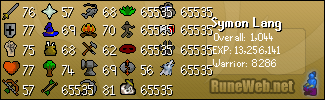

STAT AVG. = 69.1
__ Sunspear Castellan (8)
ElasAldwulf ... Last Chaos (C3)
Symon Lang ... (F2P) RuneScape
STAT AVG. = 69.1
Page 1 of 1
- You cannot start a new topic
-
This topic is locked